
Loading...
Serving Tifton, GA and surrounding areas. (229) 479-8090
Hot, humid outdoor air sneaks into your home through gaps you cannot see - and your AC pays for it all summer. We find those leaks, seal them, and show you the before-and-after results.
Air sealing in Tifton means finding and closing every gap, crack, and opening in your home's shell - around pipes, wires, light fixtures, and wall joints - so conditioned air stays inside and hot Georgia air stays out, with most jobs done in one to two days.
Think of it this way: insulation slows heat from moving through your walls and ceiling, but air sealing stops the outdoor air from bypassing the insulation entirely. In Tifton, where the humidity is high and the cooling season runs six or more months, even small gaps add up to significant energy waste and rooms that never feel comfortable. Air sealing in Tifton addresses the root cause rather than just the symptom.
Air sealing delivers its biggest results when paired with attic air sealing, since the attic floor is where the largest leaks in most Tifton homes are found. Both services together create a properly sealed thermal envelope from top to bottom.
If your Georgia Power bill climbs dramatically from May through September and your thermostat settings have not changed, your home is likely working against your air conditioner. In Tifton's climate, a leaky home forces the AC to run constantly against a steady stream of hot, humid outdoor air pushing in through gaps you cannot see.
If one bedroom is always stuffy in summer or one corner of the house feels drafty in winter, that is often a sign of nearby air leaks - not a broken HVAC system. Rooms above garages, rooms with exterior walls on multiple sides, and rooms near the attic hatch are the most common problem spots in Tifton-area homes.
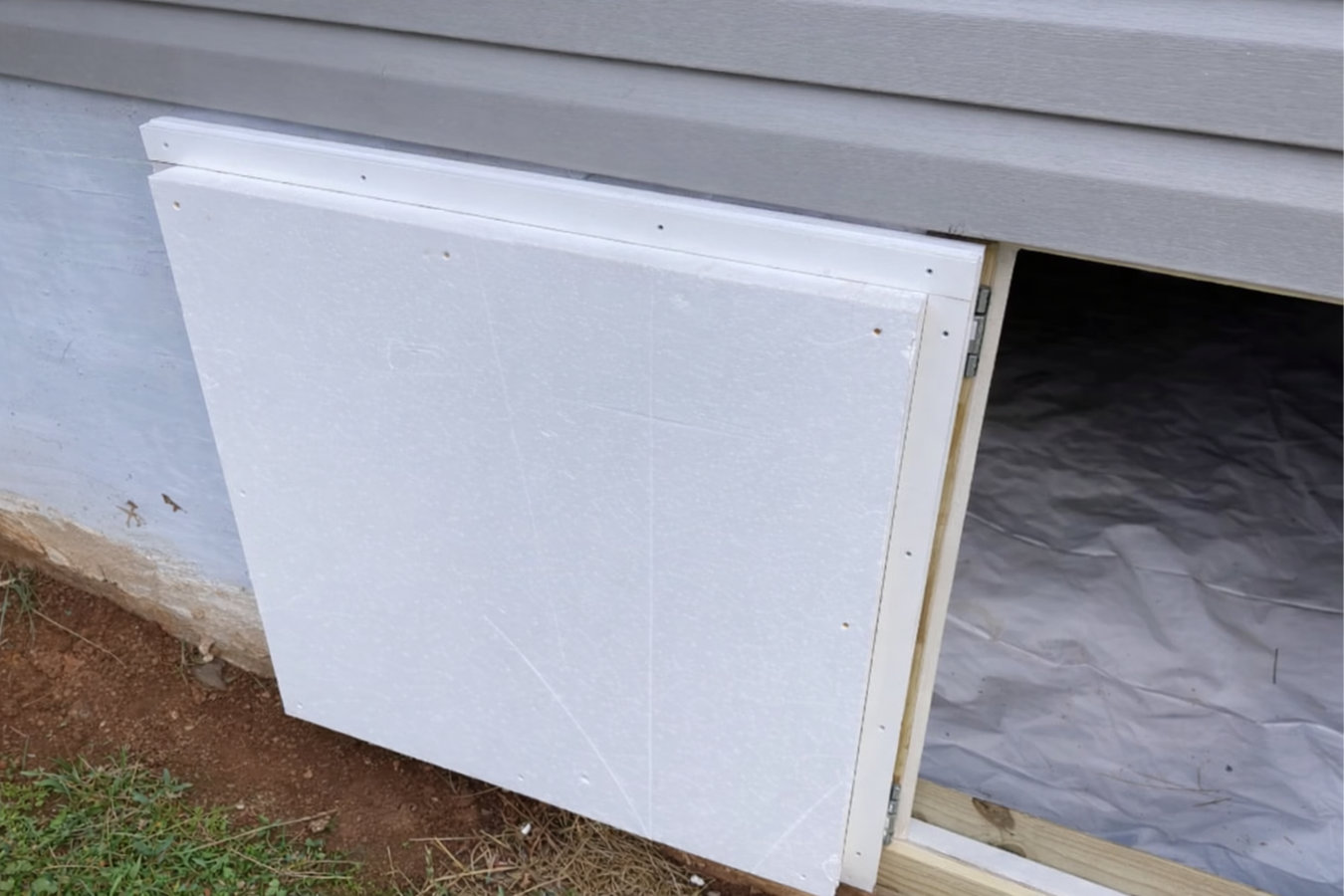
Many Tifton homes have crawl space foundations, and when those spaces are not sealed, humid outdoor air moves up through the floor into your living space. If you smell something musty in a ground-floor room, or notice discoloration on flooring near an exterior wall, your crawl space may be pushing that air into your home.
Dust streaks around recessed lights, attic hatches, or electrical outlets on exterior walls are a visible sign that air is moving through gaps in your home's shell. When air flows through a gap, it carries dust and deposits it around the opening. It is one of the clearest do-it-yourself signs that air sealing work is needed.
Every air sealing job starts with a diagnostic test - a large fan set up in a doorway that measures exactly how much air your home is losing. This test tells us where to focus and gives you a baseline number so you can see the improvement after the work is done. We use spray foam for small, irregular openings around pipes and wires, caulk for narrow cracks along trim and framing, and rigid foam board for larger gaps in the attic floor. For homes with significant crawl space leakage, we address the crawl space as part of the same project.
We also offer dedicated attic air sealing for homes where the attic floor is the primary source of leakage, as well as basement insulation for homes where the lower level contributes to energy loss. Many homeowners start with a full air sealing assessment and then decide which areas to tackle first based on where the biggest leaks are.
Best for homes where multiple areas - attic, crawl space, walls - all have leakage contributing to high bills and uncomfortable rooms.
Best for homes where most of the leakage is concentrated in the attic floor, which is the most common single source of air loss in Tifton-area homes.
Best for homes on crawl space foundations where humid outdoor air is moving up through the floor and into the living space.
Best for homeowners who want to understand exactly how leaky their home is before deciding where to invest in improvements.
Tifton sits in a hot, humid climate where average summer highs run in the low 90s and humidity stays elevated from June through September. Air sealing delivers its most dramatic payoff in climates exactly like this one - where cooling loads are heavy and sustained. A large portion of Tifton's housing stock was built in the 1960s through 1980s, well before modern energy codes required tight construction. Homes from that era were simply not built to be airtight, and many have never had a professional assessment of where air is escaping. If your home fits that description, there is a very good chance air sealing will make a noticeable difference on your next summer utility bill.
Crawl space foundations are also very common across this part of South Georgia, and an open crawl space is one of the most significant sources of air infiltration in Tifton homes. We serve homeowners throughout the region, including Valdosta and Thomasville, where the same climate and housing conditions apply. The Building Science Corporation has published clear guidance on why the attic floor - not the roof deck - is the right place to seal in hot, humid climates like ours, which you can read at buildingscience.com.
We ask about the age of your home, whether you have a crawl space or attic, and what has been bothering you - high bills, uncomfortable rooms, musty smells. We reply within one business day and schedule a free in-home assessment.
We set up a blower door fan to measure exactly how much air your home is losing before any work begins. The test takes about 30 minutes and gives both of us a clear picture of the problem areas - no guessing, just data.
We walk you through what we found, explain what we recommend, and give you a written quote before any work is scheduled. This is also when to ask about Georgia Power rebates or federal tax credits that might apply to your project.
The crew seals systematically through the areas identified - typically starting in the attic, then the crawl space. Most jobs take one day. When finished, we run the blower door test again and show you the before-and-after numbers so you can see the measurable improvement.
Free diagnostic assessment. Written estimate. Before-and-after test results. We reply within one business day.
A contractor who skips the diagnostic test and goes straight to spraying foam is guessing. We run a blower door test before work begins and again when we finish, so you see the actual improvement in a measurable number - not just our word for it.
Crawl space foundations are common across South Georgia, and they are one of the most significant sources of air infiltration in homes here. We assess every crawl space as part of any air sealing project and address it as a priority - because in this climate, it often makes the biggest difference.
Georgia Power has historically offered rebates for qualifying air sealing work through its Home Energy Improvement program. The federal Inflation Reduction Act also created tax credits for these improvements. We provide the documentation you need and can walk you through what may apply to your project. See current federal credits at energystar.gov.
Sealing a home too tight without accounting for ventilation can trap moisture and stale air - especially a concern in South Georgia's humid climate. We check that your home has adequate fresh air exchange after the work is done, not as an afterthought, but as a standard part of every project.
Every detail above reflects the same approach: diagnostic first, work second, proof third. That is the standard we hold every air sealing job to in Tifton.
Seal the attic floor - the single biggest source of air leakage in most Tifton homes - as a focused project with measurable before-and-after results.
Learn MoreAddress energy loss from below the living space, complementing the air sealing work done above in the attic and walls.
Learn MoreSpring is the best time to seal your home before peak cooling season. Call now and start saving on your first summer bill.