Loading...
Serving Tifton, GA and surrounding areas. (229) 479-8090
Your attic has gaps you cannot see - around light fixtures, pipes, and wall tops - and every one of them lets South Georgia heat and humidity pour straight into your living space. Sealing them is the fastest way to cut cooling costs and make your home feel right.
Attic air sealing in Tifton, GA means finding every gap where your attic connects to your living space and closing it with foam or caulk, covering everything from recessed lights and pipe penetrations to the tops of interior walls, with most homes completed in one to four hours. This is different from adding more insulation - insulation slows heat transfer through solid material, but it cannot stop air from moving through holes. Sealing first, then insulating, is what actually delivers lasting comfort and lower cooling bills.
Tifton homeowners deal with one of the most demanding climates in the country for home energy performance. From May through September, outdoor air that is hot, heavy, and loaded with humidity finds its way into your home through every unsealed opening above the ceiling. Your air conditioner cools that air, more hot air rushes in, and the cycle repeats every hour of every day. Sealing those pathways is the most direct way to break that cycle. If your home also needs more coverage overhead, pairing air sealing with air sealing services for the full home envelope gives you the most complete solution.
The U.S. Department of Energy identifies attic air sealing as one of the highest-return energy improvements a homeowner can make, particularly in hot-humid climates where air conditioning represents the largest share of household energy use.
If your Georgia Power bill has been creeping up summer after summer and you have not added appliances or changed your habits, your attic is a likely culprit. In Tifton's climate, an unsealed attic acts like an open window to the outdoors - your air conditioner cools the air, and the attic immediately lets hot air back in. That cycle repeats all day, and you pay for every minute of it.
If one or two rooms always feel warmer and stuffier than the rest - even with the thermostat set the same - air leaking from the attic above those rooms is often the reason. This is especially common in Tifton homes with older ductwork or rooms at the far end of the house from the air handler. It is a sign the conditioned air you are paying for is escaping before it can do its job.
In South Georgia summers, some indoor humidity is expected. But if your home feels muggy even when the air conditioner has been running for hours, outdoor air is likely sneaking in through gaps in the attic. Your AC removes humidity as it cools, but it cannot keep up if humid air is constantly entering through unsealed openings above the ceiling.
If you stand near your attic access panel and feel a noticeable draft, or if you open the hatch and can see light coming from unexpected places, your attic has significant air leaks. This is one of the easiest signs to check yourself and a reliable indicator that a professional assessment is worth scheduling. Tifton homes built before the 1990s are particularly likely to show this.
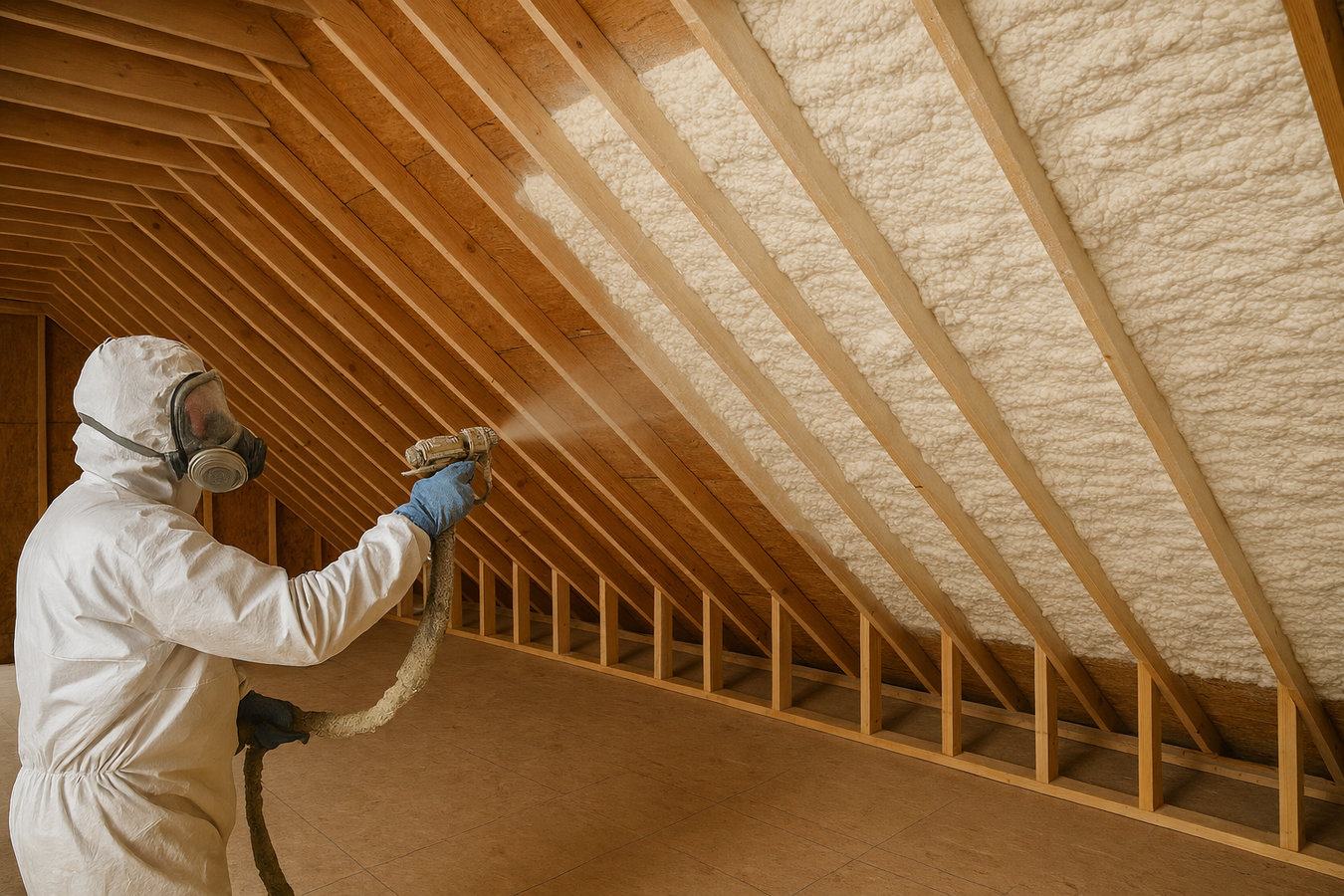
We work methodically through the attic, sealing every opening we find using two-component spray foam for larger gaps and acoustical sealant for smaller cracks. The most common spots are around recessed light cans, plumbing and electrical penetrations, the top plates of interior walls, and the attic hatch frame. None of this is visible from inside your home when the job is done. For homeowners whose homes need both air sealing and added coverage, we pair this work with retrofit insulation so the sealing and insulation are done together in the right order.
We also offer blower door testing before and after the job for homeowners who want measured proof that the sealing made a difference - not just our word that the work was done. This matters in Tifton because the homes here vary a lot in age and condition, and a test gives you a number you can verify. When the project is complete, we walk you through what we found and flag anything else we noticed in the attic, like ventilation issues or areas where air sealing services in other parts of the home envelope would extend the benefit.
A complete pass through the attic sealing every gap, crack, and penetration - the core service for homeowners dealing with high cooling bills or uneven comfort.
Focused work on recessed light cans, which are among the largest single sources of attic air leakage in homes built before 2000.
A measurable audit showing exactly how much your home's air leakage improved, giving you documented results rather than a completed checklist.
Air sealing done first, followed immediately by blown-in or batt insulation - the sequence that delivers the full benefit of both improvements.
Tifton sits in Climate Zone 2 according to Georgia Department of Community Affairs energy code guidelines - a classification that reflects just how hot and humid this part of South Georgia gets. Summers here regularly push into the mid-to-upper 90s with a heat index well above 100 degrees Fahrenheit, and the humidity stays elevated from May through September. An unsealed attic in this environment is not a minor inconvenience - it is a direct line between the hottest, most humid air outside and the conditioned space your family lives in. Homeowners across the region, from Valdosta to Moultrie, deal with the same conditions and the same urgency around keeping their attics properly sealed.
A significant share of Tifton's residential neighborhoods were built in the 1950s through the 1980s, when building practices did not prioritize airtightness the way modern construction does. Homes from that era often have dozens of small gaps around old wiring, original plumbing, and ceiling fixtures that have never been addressed. Those gaps have been quietly letting hot, humid South Georgia air into the home for decades. Tifton's high humidity also makes moisture management a real concern - when warm, humid air leaks into a cooler attic space, it can condense and create conditions for mold or wood damage over time. Sealing those air pathways reduces that risk along with the energy waste. The U.S. EPA recognizes that controlling moisture entry through air leakage is a key step in preventing indoor mold problems.
We will ask a few basic questions - the age of your home, any comfort or billing issues you have noticed, and whether any previous insulation work has been done. This helps us show up prepared. We reply within one business day and can usually schedule a visit within the week.
Before any work starts, we inspect the attic and use a blower door test to measure exactly how much air your home is currently losing. This tells us where to focus the sealing work and gives you a baseline number to compare against after the job is done.
You receive a written quote that breaks down what work will be done and what it will cost - including whether any insulation needs to be moved to access the areas being sealed. No surprises. Cost for a typical Tifton home is in the $200 to $600 range for the sealing work itself.
The technician works entirely in the attic, sealing every gap with foam and caulk. Most jobs take one to four hours. We run the blower door test again when done to confirm the results, then walk you through what we found and what was sealed.
We reply within one business day - no sales pitch, just a straight answer about what your home needs.
We use blower door testing before and after every air sealing job so you have a documented number - not just our word - showing how much the air leakage was reduced. In South Georgia's climate, where the stakes on cooling efficiency are high, that proof matters.
We have been working on homes across Tifton and the surrounding region since 2018, which means we know exactly what the older housing stock here looks like inside an attic. The gaps in a 1970s Tifton home are not the same as the gaps in a newer build, and we seal accordingly.
Sealing an attic without verifying ventilation is adequate can trap moisture and create problems worse than the ones you started with. We always assess ventilation as part of the job, so the sealing and the airflow work together - not against each other.
The federal energy efficiency tax credit can cover up to 30% of qualifying project costs, and we provide the documentation you need to claim it. The IRS Energy Efficient Home Improvement Credit is real money back at tax time, and we make sure our customers know how to use it.
Every one of these proof points comes back to the same thing: you should know what you are getting before the work starts and be able to verify that it was done right after. That is how we operate every job in Tifton.
Add insulation to your existing attic, walls, or crawl space without major construction - the natural next step after sealing the air gaps.
Learn MoreWhole-home air sealing that goes beyond the attic to address every part of your building envelope where conditioned air is escaping.
Learn MoreTifton summers are long - the sooner your attic is sealed, the sooner you stop paying for air that escapes. Call us today or request a free estimate online.